
By Shiloh Cabrera | Realtor • Renter Advocate • Negotiator
One question can lead to over thousands of dollars saved.
We negotiate salaries, repairs, cars and even street-vendor prices. So why do so many of us accept the landlord’s asking rent without asking a single question?
| THE BIG IDEA The asking rent is an asking price. When inventory is high and apartments are sitting vacant, qualified renters may have more negotiating power than they realize. |
Why renters should negotiate
Housing is often one of the largest items in a household budget. If you are willing to negotiate a salary, a mechanic’s bill or the price of work being done in your home, it makes sense to at least ask whether your rent or lease terms are flexible.
A landlord can advertise any asking price, but the market determines what renters are actually willing to pay. When comparable apartments are available for less, listings are lingering, or landlords are offering concessions, those are signs that you may have room to negotiate.
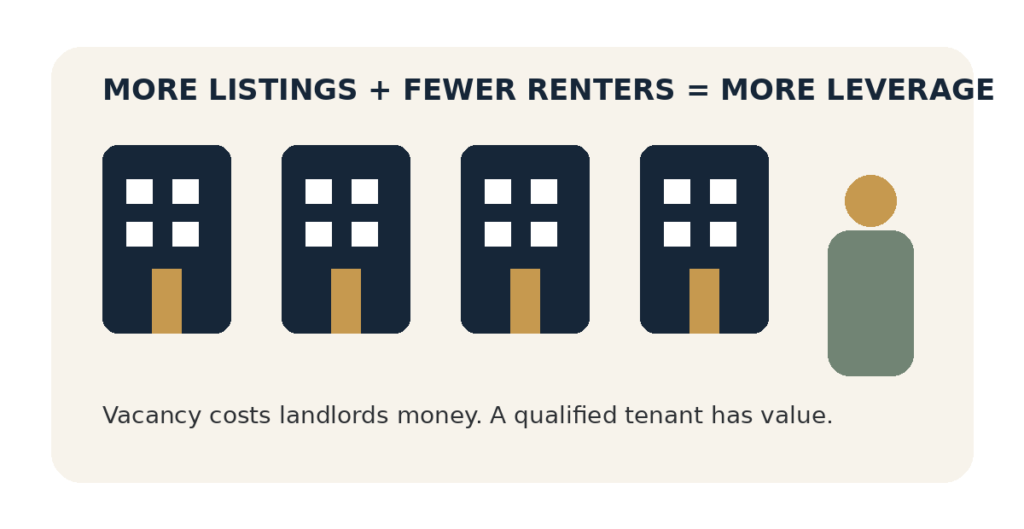
Vacancy is expensive
Think about the math. A landlord asking $2,500 per month may resist reducing the rent by $100. But if the apartment sits empty for one additional month, that is $2,500 in lost rent while the mortgage, taxes, insurance, association fees and other expenses may still continue.
A reliable tenant at a slightly lower rent can sometimes be financially better than holding out for the highest possible number.
| MY PERSONAL EXPERIENCE When I used to rent, I negotiated my rent with all three of my landlords. At renewal, I would explain that I wanted to stay, but moving out could leave the apartment vacant, require repainting or turnover work, and cost the landlord a month or two of rent while finding another tenant. Then I asked for a reduction. Each time, they agreed. Was it intimidating to ask? A little. But the worst answer was no. If they said no, I was no worse off than before I asked. |
The two best times to negotiate
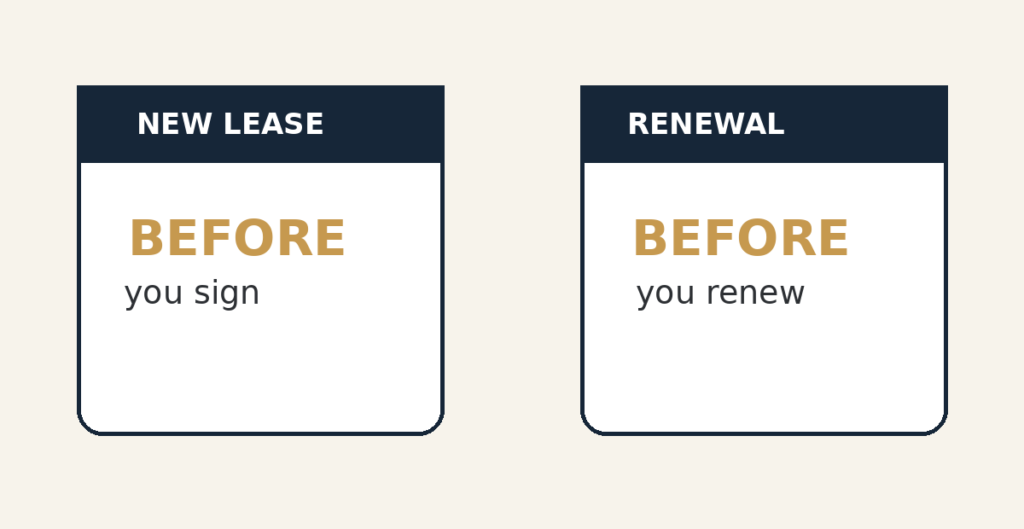
1. Before you sign a new lease
You have not committed yet, and the owner still has a vacancy to fill. Research comparable rentals, note how long the property has been listed, and make a reasonable offer backed by the market.
2. At lease renewal
This may be your strongest moment if you have paid on time, taken care of the property and avoided problems. You are no longer an unknown applicant. You are a proven tenant, and replacing you has a cost.
Make yourself the tenant they want to keep
Your negotiating position is stronger when you can point to a solid payment history, good credit, stable income, respectful communication and a record of taking care of the home. Negotiation is not just about asking the landlord to give something up. It is about showing the value you bring in return.
| TRY THIS AT RENEWAL “I’ve really enjoyed living here and would like to renew. I’ve paid my rent on time, taken good care of the property and haven’t had any issues. Based on current rental prices in the area, I’d like to discuss renewing at $____.” |
Don’t only negotiate the monthly rent
If the owner will not move on the advertised rent, there are other ways to create value. Consider asking about:
- One month free, including the possibility of spreading the concession across the lease term
- Free or reduced parking
- Reduced move-in costs or a lower security deposit where legally permitted
- Included utilities
- A longer lease with the rate locked in
- No increase at the next renewal
- An apartment improvement or upgrade
- A flexible move-in date or another lease concession

Do your homework before you ask
Compare apartments with similar location, bedrooms, bathrooms, square footage, amenities, parking and condition. Save listings that support your number. If the landlord is asking $2,700 and several comparable units are around $2,450, that evidence is far more persuasive than simply saying the rent feels too high.
Keep your offer realistic. The goal is not to insult the owner. The goal is to create a deal that makes financial sense for both sides.
A simple negotiation formula
| 1 RESEARCH | Find 3 to 5 comparable rentals and check how long competing listings have been available. |
| 2 SHOW YOUR VALUE | Highlight on-time payments, credit, income, rental history and care of the property. |
| 3 MAKE A SPECIFIC ASK | Ask for a realistic monthly amount or a specific concession. |
| 4 GIVE OPTIONS | If rent is firm, ask about parking, a free month, utilities, upgrades or a longer rate lock. |
| 5 GET IT IN WRITING | Any agreed rent, concession or lease term should appear in the written lease or renewal. |
One question could save you thousands
A $100 monthly reduction equals $1,200 per year. A $200 reduction equals $2,400. Even when the answer is no, asking respectfully can open the door to a counteroffer or another concession.
So before you automatically accept the number in front of you: research the market, know your value as a tenant, make a reasonable ask and negotiate.
| WHAT’S THE WORST THEY CAN SAY? NEGOTIATE. |
Shiloh Cabrera • Realtor
Real Estate. Real Money. Real Life. Educational content only. Rental markets, landlord incentives and local laws vary by location